
WELCOME BONUS 300%
UP TO €2000 + 100
FREE SPINS
UP TO €2000 + 100
FREE SPINS
Home → Blackjack
Blackjack at Slotoro Casino: Variants, Rules and Payouts
When can you increase your bet?
The Blackjack Party table at Evolution allows stakes ranging from 1,000 EUR to 1,000 EUR per round, establishing a fixed betting band for this specific variant. This narrow range contrasts with the broader limits found in other live dealer games, requiring players to adjust their bankroll management strategy accordingly. Consequently, high rollers cannot escalate wagers beyond the 1,000 EUR cap during standard play sessions on this particular stream. The fixed nature of these limits ensures consistent risk exposure for all participants regardless of their preferred betting progression systems.
What Hole Card Means at a Live Table
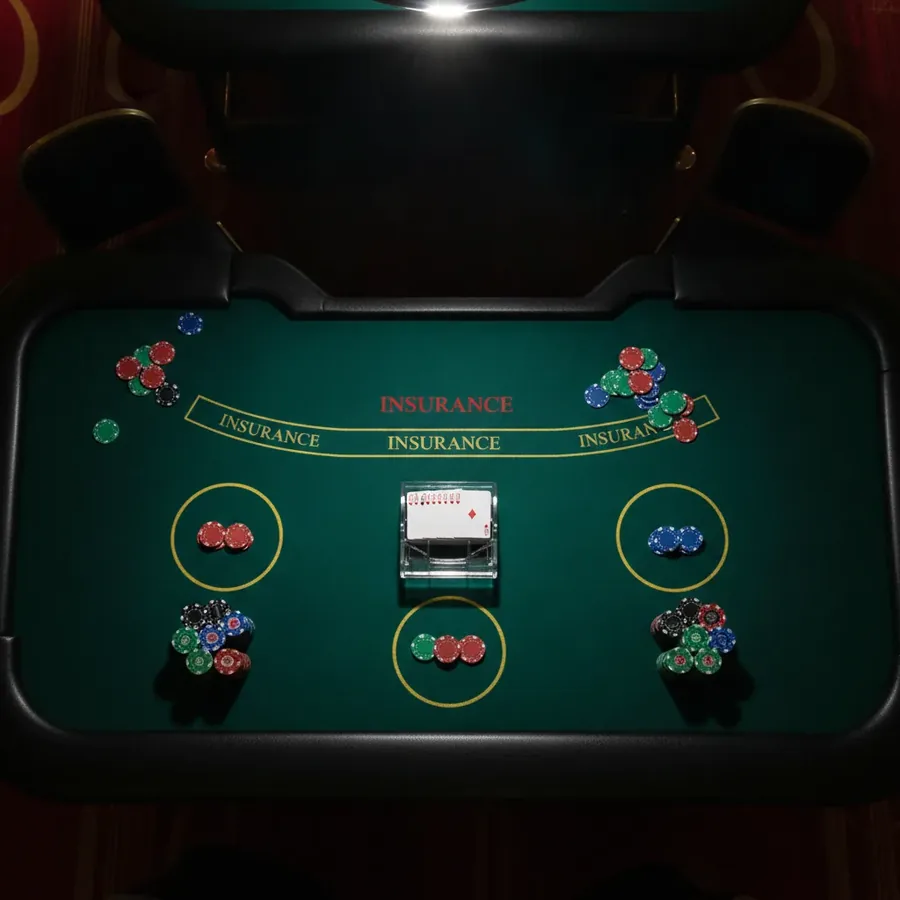
Infinite Blackjack by Evolution deals cards using an automatic shoe that handles unlimited player seats without revealing the dealer's hole card until the action concludes. This procedural difference from RNG tables means players must rely on visible upcards and basic strategy charts rather than knowing the final hand value immediately. The RTP for this game stands at 99.47%, which is slightly lower than the standard 99.54% offered by the 6-deck version. Players should note that side bets like Any Pair or Hot 3 have distinct payout structures that do not affect the main game outcome.
Stand-on-17 Rule and Its Meaning for Players
The standard Blackjack 6 Decks variant requires the dealer to stand on Soft 17, a rule that reduces the house edge to 0.46% compared to higher edges in hit variants. This specific rule prevents the dealer from drawing additional cards when holding a total of seventeen including an Ace valued as eleven, thereby lowering the probability of busting. If the rule were changed to Hit on Soft 17, the house advantage would increase by exactly 0.22 percentage points, significantly impacting long-term returns. Players utilizing optimal basic strategy can maintain the lowest possible disadvantage under these favorable conditions provided by the casino software.
Live Table vs RNG Table: Speed and Limits
Lightning Blackjack offers a maximum stake limit of 2,500 EUR per hand, whereas Infinite Blackjack extends this ceiling to 5,000 EUR for high-limit players seeking larger exposure. The live dealer format introduces variable pacing due to physical card handling and interaction, contrasting with the instant resolution of RNG games that allow hundreds of hands per hour. Lightning rounds apply multipliers up to 25x on winning hands, adding volatility that does not exist in the standard RNG 6-deck version with its fixed 3:2 payout. These structural differences mean bankroll variance will be substantially higher in live environments despite similar theoretical return percentages across platforms.
Live stream with three cameras and OCR
Evolution utilizes optical character recognition technology to instantly capture and display card values on screen, eliminating the need for manual entry and ensuring accurate bet verification for every wager placed. This system processes data from multiple camera angles to provide a comprehensive view of the table, enhancing transparency for players monitoring their blackjack surrender decisions or split actions. The integration of OCR supports the 10% contribution rate of table games toward bonus wagering requirements by providing auditable records of each transaction and outcome. Such technological infrastructure guarantees that the displayed RTP figures remain accurate and verifiable against the actual gameplay mechanics occurring in real-time.
Blackjack variants at a glance
| Variant | Payout | House edge | Rule | Bet range |
|---|---|---|---|---|
| Blackjack Ein Deck, klassische Regeln, 3:2 | 99.85% | 0.15% | Weniger Decks = niedrigerer Vorteil; ein Deck gibt ca. −0.48 Prozentpunkte gegenüber 8 Decks. Oft durch 6:5 Auszahlung kompensiert. | Blackjack 3:2, Gewinn 1:1 |
| Blackjack Surrender (Late Surrender) – Regel-Effekt | n.a. (Regel-Modifikator) | −0.08 Prozentpunkte | Spieler gibt Hand nach Dealer-Blackjack-Prüfung auf, verliert die Hälfte des Einsatzes. Verbessert RTP um ca. 0.08 Prozentpunkte. Early Surrender ist wesentlich wertvoller (bis −0.6 Prozentpunkte), aber extrem selten. | Rückzahlung 50% des Einsatzes |
| Blackjack 6 Decks, S17, DAS, DOA, Auszahlung 3:2, Basisstrategie | 99.54% | 0.46% | Dealer steht auf Soft 17; Verdopplung auf jeder Zweierkarte; Verdopplung nach Split erlaubt; keine Aufgabe. Basisstrategie ist für diesen Wert zwingend | Blackjack 3:2, normaler Gewinn 1:1, Insurance 2:1 |
| Blackjack Insurance / Versicherung (6–8 Decks) | 92.53% | 7.47% | Separate Nebenwette bis 50% der Hauptwette, wenn der Dealer ein Ass hat. Basisstrategie schreibt IMMER Ablehnung vor (außer Karten zählen bei True Count ≥ +3). Bei einem Deck Vorteil ≈ 5.88% | Insurance 2:1 |
| Blackjack Liberal Vegas Strip (liberale Regeln, 3:2) | 99.72% | 0.28% | Günstigste Regelkombination: S17 + DAS + Resplit + Late Surrender. Standardabweichung 1,15 | Blackjack 3:2, Gewinn 1:1 |
| Blackjack Split / Double / H17 – Regel-Effekte | n.a. (Regel-Modifikatoren) | H17 +0.22 Prozentpunkte; RSA −0.08 Prozentpunkte; DAS −0.14 Prozentpunkte | Dealer Hits Soft 17 verschlechtert RTP um 0.22 Prozentpunkte; Resplit Aces verbessert um 0.08 Prozentpunkte; Double After Split verbessert um ca. 0.14 Prozentpunkte; 6 Decks statt 8 – ca. 0.02 Prozentpunkte. | Double – Einsatz ×2 mit einer Karte; Split – bis 4 Hände; Ass-Split meist mit einer Karte. |
Blackjack Payout 3:2 Explained in Detail
The payout structure for a natural Blackjack hand determines the immediate return on a winning bet, with standard rules offering a 3:2 ratio. This specific multiplier converts a 100 EUR stake into a 150 EUR profit, whereas the inferior 6:5 variant reduces this payout to only 120 EUR. Consequently, players using the 3:2 table retain significantly more capital over time compared to those forced into the 6:5 format.
Switching from the favorable 3:2 payout to the 6:5 alternative increases the house edge by exactly 1.39 percentage points, shifting it from 0.46% to 1.85%. This mathematical penalty is stronger than most other rule changes, such as the dealer hitting on soft 17 which adds 0.22%. Therefore, selecting tables with the higher payout ratio is essential for minimizing long-term losses.
The 3:2 payout applies to the primary Blackjack win, while standard bets typically pay 1:1 and insurance pays 2:1. In contrast, the Insurance side bet carries a much higher house edge of 7.47%, making it statistically disadvantageous for all but card counters. Players should generally avoid this wager unless their true count reaches +3 or higher.
Four hours of play with 300 EUR bankroll
A 300 EUR bankroll allocated for four hours of gameplay requires careful management due to the game contribution limits set by the bonus terms. Table games like Blackjack contribute only 10% toward the wagering requirement, meaning every 100 EUR bet counts as just 10 EUR of turnover. This restriction forces players to wager significantly larger amounts to clear the bonus compared to slots.
Assuming an average bet of 10 EUR per hand, a player might complete roughly 150 hands per hour, totaling 600 hands over four hours. With a house edge of 0.46% on liberal rules, the expected loss is approximately 2.76 EUR, leaving the bankroll nearly intact. However, the low contribution rate makes clearing the 300% bonus up to €2,000 extremely difficult within this timeframe.
The welcome bonus of 300% up to €2,000 plus 100 free spins demands high volume to satisfy the associated wagering conditions. Since only 10% of table stakes count, a player must place 10 times more bets than a slot player to meet the same requirement. This structural imbalance favors slot deposits, where 100% contribution applies directly to the turnover target.
No Double Down on three cards
The rule prohibiting double down on three cards restricts optimal strategy application when the player receives an additional card after splitting. This limitation removes a valuable opportunity to increase the bet when holding a strong total like nine against a weak dealer upcard. Such restrictions are common in live variants like Infinite Blackjack, which offers unlimited seats at Evolution tables.
Allowing double after split (DAS) improves the player's expected return by 0.14 percentage points, while resplitting aces adds another 0.08 percentage points. When these options are removed, the house edge rises accordingly, eroding the advantage gained from other favorable rules like late surrender. Players seeking the best RTP should verify if DAS is permitted before sitting down.
Infinite Blackjack allows doubling on any two cards but often excludes doubling on three-card totals formed after a split. This specific constraint affects the theoretical return, pushing the RTP slightly below the ideal 99.47% found in some versions. Comparing this to Lightning Blackjack, which offers multipliers up to 25x, highlights the trade-off between strategic depth and volatility.
How long does a Live Blackjack round take?
A single round of live Blackjack typically lasts between 30 and 60 seconds, depending on the number of players and the dealer's speed. Tables like Blackjack Party feature two moderators who may slow the pace to maintain a party atmosphere, extending the duration slightly. This timing influences the hourly betting volume available to each participant during a session.
Lightning Blackjack introduces random multipliers up to 25x, which can add extra seconds for animation and result announcements to each round. The base RTP remains at 99.56%, but the added complexity means fewer hands per hour compared to standard infinite tables. Players must account for this reduced speed when calculating their effective bankroll depletion rate.
Betting limits range from 1 EUR to 5,000 EUR on Infinite Blackjack, allowing high rollers to accelerate their turnover requirements faster. A maximum bet of 5,000 EUR contributes 500 EUR toward the wagering goal per hand, significantly offsetting the 10% contribution rule. This high-limit option is crucial for players aiming to clear large bonuses efficiently.
Six Card Charlie Pays Immediately with Six Cards
A Six Card Charlie rule awards an automatic win if the player draws six cards without exceeding 21, bypassing the normal comparison with the dealer. This side benefit effectively lowers the house edge by providing a safety net for hands that would otherwise bust later. It is a rare feature not commonly found in standard online or land-based Blackjack variants.
Standard side bets like Any Pair, 21+3, Hot 3, and Bust It are available on Infinite Blackjack, offering different risk-reward profiles. These wagers have varying house edges and payouts, distinct from the main game's 0.46% edge under liberal rules. Players should understand that these side bets do not contribute favorably to overall expected value despite their immediate payout potential.
The presence of multiple side bets increases the variance of the game, requiring a larger bankroll to withstand potential losing streaks. While the main game offers a high RTP of 99.47%, side bets often carry edges above 5%, draining the bankroll faster. Strategic players should prioritize the base game over these auxiliary wagers to preserve their funds.
Mobile version needs 1 Mbit bandwidth
The mobile interface requires a minimum bandwidth of 1 Mbit/s to function without interruption. This threshold ensures that the game assets load correctly on smaller screens, preventing technical errors during live dealer sessions like Lightning Blackjack or Infinite Blackjack. Users with slower connections may experience latency that disrupts the real-time interaction required for these specific titles.
A stable connection is critical when placing time-sensitive bets, such as the side bets in Infinite Blackjack which require action before cards are dealt. Insufficient bandwidth can cause bet placement failures, effectively wasting the wager if the round proceeds while the player is still loading. The casino does not refund lost bets due to local connectivity issues on the user's end.
Players should verify their network speed before starting a session, especially when engaging with high-stakes tables that have limits up to 5,000 EUR. A weak signal might force a reload, causing the player to miss the window for optimal moves like doubling down on 11. Reliable internet access is the first step in maintaining control over the bankroll during mobile play.
Splitting costs double bet: plan budget
When a player splits a pair, the original stake must be matched immediately, effectively doubling the risk on that specific hand. For example, splitting a €10 bet creates two separate €10 wagers, totaling €20 at risk compared to a single hand. This mechanic significantly accelerates the burn rate of the bonus funds under the 10% contribution rule for table games.
The benefit of splitting depends heavily on the specific rules, such as the ability to resplit aces (RSA) which improves the RTP by 0.08 percentage points. However, the immediate cash outflow remains substantial, requiring careful budget management to sustain multiple hands through variance. Players using liberal rules like DAS gain an additional 0.14 percentage points, but the capital requirement stays high.
Strategic splitting is essential to minimize the house edge, which stands at 0.28% for Liberal Vegas Strip Blackjack with optimal play. Failing to split pairs that should be divided increases the effective cost per hour, potentially exhausting the €2,000 bonus cap faster than anticipated. Budget planning must account for these doubled exposures to avoid premature depletion of the gaming balance.
Place Side Bet before cards are dealt
Side bets in Evolution's Infinite Blackjack must be placed strictly before the cards are distributed to the players and the dealer. These wagers, including Any Pair, 21+3, Hot 3, and Bust It, operate independently of the main game outcome and require upfront capital commitment. Missing this deadline results in the inability to participate in the side market for that specific round.
The RTP for these side markets varies significantly, often carrying a much higher house edge than the primary blackjack game. For instance, insurance carries a house edge of 7.47%, making it mathematically inferior unless counting cards with a true count of +3. Understanding these distinct odds is crucial for managing the overall return expectations of the session.
Contributing to the wagering requirement involves allocating funds to these optional bets, which count toward the 10% table game contribution limit. Since slots contribute 100%, relying heavily on side bets slows down the clearance of the bonus significantly. Players must calculate the turnover impact carefully, as each euro wagered on side bets requires ten euros of total volume to clear one credit.
Ignored Basic Strategy Chart: 1 Percent Wasted
Deviating from the basic strategy chart in 6-deck blackjack with S17 and DAS increases the house edge by approximately 1 percentage point. The baseline advantage for the casino is 0.46%, but ignoring optimal moves pushes this figure closer to 1.46%, drastically reducing long-term profitability. This error compounds over thousands of hands, eroding the expected return on investment steadily.
The difference between playing optimally and guessing becomes stark when comparing RTP values; standard play yields 99.54% return, while mistakes lower this figure. Each incorrect decision, such as hitting on 12 against a dealer 4, adds to the house's mathematical advantage. Consistent adherence to the chart is the only way to maintain the theoretical payout rates advertised for the game variant.
Players aiming to clear the 300% welcome bonus up to €2,000 must minimize losses to survive the wagering period. With table games contributing only 10%, every percentage point of increased house edge extends the time and capital needed to unlock withdrawals. Strategic discipline is therefore not just about winning hands, but about surviving the bonus terms efficiently.
Double Down vs Simple Hit on 11
Doubling down on a hard 11 against a dealer's upcard of 2 through 10 is the statistically correct move in most blackjack variants. This action allows the player to double the initial stake, typically 1:1 win potential, in exchange for receiving exactly one more card. The move exploits the high probability of drawing a 10-value card, maximizing expected value compared to a simple hit.
The effectiveness of doubling is enhanced by rules like Double After Split (DAS), which improves the RTP by 0.14 percentage points. Without DAS, opportunities to double on split hands are lost, slightly increasing the house edge. Players must recognize these rule variations to adjust their aggressive betting strategies accordingly during the session.
Using bonus funds for doubling down accelerates the turnover requirement, as each doubled bet counts fully toward the 10% contribution rate. A €10 double-down becomes €20 of wagering volume, helping to meet the conditions for the free spins or cash bonus faster. However, the increased variance means the bankroll must be sufficient to withstand potential losses on these larger stakes.
Contact
Live - online chat
Banking









Providers












Slotoro Casino 2026